Lawn Pest Exterminator
Healthy turf across North Carolina faces steady pressure from insects that live, feed, and breed in soil and grass. Warm summers, mild winters, and frequent moisture create ideal conditions for pests that damage roots, blades, and the structure of lawns from the ground up. Some insects stay hidden beneath the surface, while others chew, suck, or tunnel in plain sight. In both cases, the impact tends to build gradually, leaving property owners frustrated by thinning grass, irregular brown patches, and areas that never seem to recover, no matter how much water or fertilizer is applied.
Insect activity often increases during seasonal transitions. Spring brings egg hatching and renewed feeding, while late summer heat stresses turf and makes it more vulnerable to damage. Because these creatures are part of the local environment, they do not simply disappear on their own. Effective control efforts require an understanding of how different species behave, what conditions attract them, and how their life cycles influence the timing of treatments. Our services are designed to address those realities rather than rely on surface-level solutions that miss the underlying cause.
Common Turf-Damaging Species
Several types of insects stand out from others for being especially problematic. White grubs are among the most destructive because they feed on roots that grow beneath the soil line. These larvae, which develop from beetles such as Japanese beetles and masked chafers, interfere with plants' ability to absorb water and nutrients. Affected areas often feel spongy underfoot and may peel back easily, revealing extensive root damage beneath otherwise ordinary-looking grass.
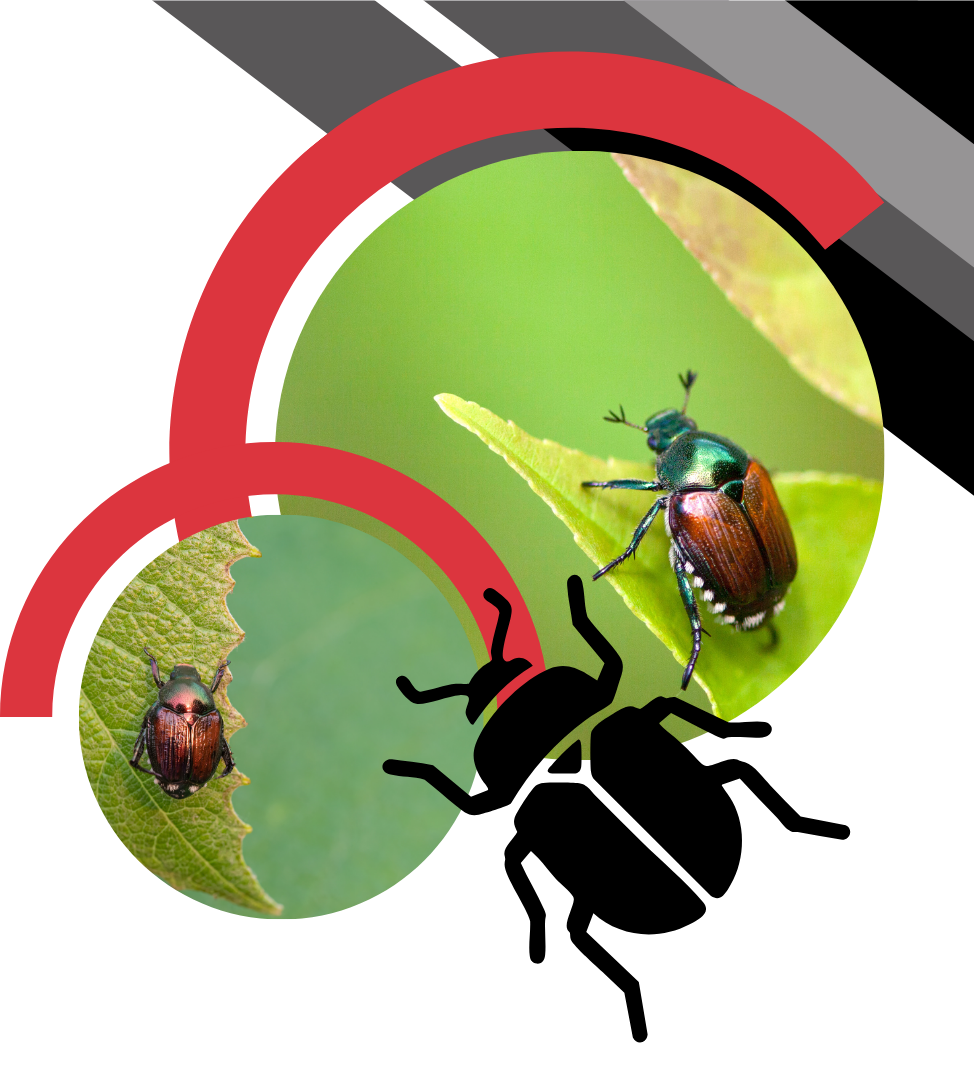
Japanese beetles contribute to lawn issues in two ways. As adults, they feed on ornamental plants, while their larvae remain hidden underground, feeding on turf roots. Chinch bugs are another frequent concern, particularly in warm-season grasses. They extract moisture directly from grass blades and inject toxins that cause yellowing and die-off, often mistaken for drought stress. Their activity intensifies during hot, dry periods, which makes them difficult to identify without close inspection.
Other regional species include mole crickets, which tunnel through soil and disrupt root systems, and sod webworms, whose caterpillars chew grass at night and leave ragged patches behind. Fire ants also play a role by building mounds that interfere with mowing and weaken surrounding turf. Each of these insects damages lawns differently, which is why accurate identification is critical before any removal strategy begins.
Signs Of Infestation And Why Early Action Matters
Lawn pests rarely announce themselves right away. Early signs often look minor, such as thinning grass, uneven color, or patches that do not respond to watering. Over time, these symptoms become more pronounced as insects continue feeding and reproducing. Birds pecking at the lawn, increased animal digging, or grass that pulls up with little resistance can indicate active grub populations below the surface.
Delaying treatment allows pests to complete more of their life cycle, increasing the scale of damage and making recovery harder. Grass stressed by insect activity becomes more vulnerable to weeds, disease, and environmental strain. Once large sections of turf lose their root structure, reseeding or replacement may be needed, which adds time and expense. Addressing infestations early helps protect the lawn’s overall health and limits how far the damage spreads.
Our professionals focus on reading these warning signs accurately. Not every brown area is caused by insects, and applying the wrong solution can make matters worse. Careful evaluation ensures that treatments are applied only where needed and at a point when they can disrupt activity most effectively.
Our Targeted Approach To Control And Removal
Effective removal depends on precision rather than guesswork. Our approach begins with identifying the specific insects present and understanding their current stage of development. Treatments are selected and timed to interrupt feeding and reproduction while minimizing unnecessary disruption to the lawn itself. Because different species respond to different control methods, a targeted plan leads to more consistent results than broad applications.
Seasonal monitoring plays a key role in long-term management. Some insects are active only during certain months, while others persist throughout much of the year. By aligning treatments with these patterns, our services help reduce recurring infestations and support healthier turf growth over time. The goal is to restore balance to the lawn so grass can establish deeper roots and better withstand future pressure from insects and environmental stress.
Education is also part of the process. Understanding how watering habits, mowing height, and soil conditions influence activity allows property owners to make informed decisions that support treatment efforts. When these factors work together, lawns recover more evenly and maintain a stronger appearance across changing seasons.
Lawn pests can quietly undermine even the most carefully maintained turf, turning small issues into widespread damage if left unaddressed. With professional identification and targeted removal, properties can regain and maintain their visual appeal without unnecessary disruption. If signs of insect activity are affecting your property or you want to prevent future problems, don't hesitate to contact us today at NC Pest Detectives to learn more about our services and discuss options tailored to your landscape.
Frequently Asked Questions About Lawn Pests
Q1. Why Does My Lawn Still Look Brown After I Have Increased My Watering Schedule?
A1. Many homeowners mistake the yellowing caused by chinch bugs or the wilting caused by root-eating grubs for simple drought stress. If your grass is not recovering despite heavy watering, pests may be the culprit. Chinch bugs actually inject a numbing toxin into the grass blade that prevents it from taking in water, while grubs physically sever the roots. In these cases, adding more water will not help because the "plumbing" of your grass has been compromised by insect activity.
Q2. Is It Necessary To Treat My Lawn If I Only See A Few Beetles Or Insects?
A2. Spotting a few insects is normal, but they often serve as an early warning for a much larger underground population. For example, the Japanese beetles you see on your roses today are likely laying eggs that will turn into root-destroying grubs tomorrow. Professional intervention focuses on the bugs' entire lifecycles. By addressing them early, you can stop the reproductive cycle before the larvae reach a density that causes visible, widespread turf death.
Q3. How Do Soil Conditions And Mowing Heights Affect Pest Vulnerability?
A3. Environmental stress makes it much easier for pests to take hold. Grass that is mowed too short has a shallower root system, making it less resilient to the tunneling of mole crickets or the feeding of grubs. Additionally, compacted soil or excessive thatch provides a protective layer for insects to hide and breed. Our services do more than just eliminate the pests; we provide guidance on cultural practices that make your lawn a less inviting habitat for invaders.